
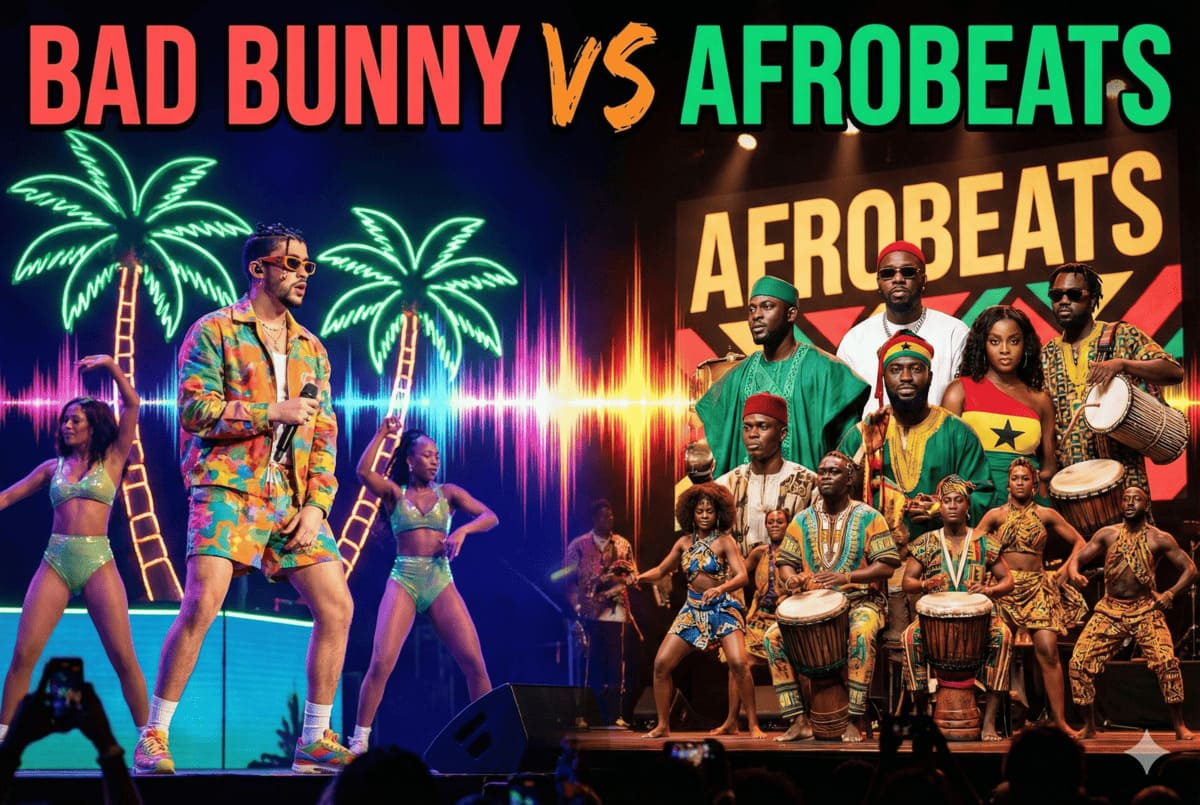
The recent lawsuit faced by Bad Bunny over an Afrobeats sample, reported by Rolling Stone, shows how sample clearance issues can quickly turn into high-profile copyright disputes.
At ERP Lawyers, we have examined similar questions in our article “Cover o infracción: el caso de Ángela Aguilar” (in Spanish), where we analyse when a performance may cross the line from a legitimate cover into potential infringement.
If you create, produce or distribute music that could reach Costa Rica —whether you are based in the country or abroad— it is essential to understand how Bad Bunny–style music sampling issues are treated under local copyright law. This will help you avoid takedowns, blocked releases or costly legal conflicts.
What is music sampling and why does it matter?
Music sampling is the use of a fragment of an existing recording (melody, vocal line, drum pattern, effect, etc.) within a new work.
Even if the fragment is short or altered, it usually remains protected as part of the original work. As a rule, if you want to use a sample from someone else’s track in a commercial context, you should obtain prior authorisation from the rights holder.
What does Costa Rican law require to clear a sample?
Costa Rican copyright law grants authors and rights holders broad control over the use of their works. This includes the exclusive right to:
- Authorise reproduction of the work.
- Allow inclusion in phonograms or sound recordings.
- Approve adaptations, remixes and new versions.
- Control distribution and public communication, including online.
In practice, this means:
- Using a sample without permission is considered unauthorised reproduction, even if it is only a few seconds.
- Giving “credit” is not enough; you need clear, preferably written, consent defining scope, territory, duration and any royalties.
- Modifying or transforming the sample does not remove the need for permission.
How are moral rights protected in Costa Rica?
Beyond economic rights, Costa Rican law strongly protects moral rights, such as:
- The right to be recognised as the author.
- The right to object to distortions or alterations that harm the integrity of the work.
- The right to prevent uses that may damage the artist’s reputation.
If a sample is heavily edited or placed in a context the original creator finds offensive or degrading, they may claim not only economic damages but also moral damages.
Are foreign artists protected in Costa Rica?
Yes. Costa Rica protects both domestic and foreign authors. Protection is not conditioned on residence or nationality.
This implies that:
- A foreign artist can bring a claim in Costa Rica if their work is exploited here without authorisation.
- Costa Rican labels, producers or distributors may be held liable for using uncleared samples in works that are exploited in the country.
High-profile disputes like the Bad Bunny case or the Ángela Aguilar discussion show how cross-border exploitation through streaming platforms can trigger legal exposure in multiple jurisdictions, including Costa Rica.
What can happen if you use an uncleared sample?
If a court finds that an uncleared sample infringes copyright, the rights holder may request:
- Immediate cease of distribution of the infringing track.
- Temporary removal from streaming platforms and social media.
- Removal or replacement of the sample in future releases.
- Monetary compensation covering:
- Lost profits.
- Direct losses.
- Moral damages (reputational or artistic harm).
Responsibility may extend beyond the main artist to:
- The phonographic producer.
- The label.
- Aggregators and distributors.
- Any party that commercially exploits the track without proper clearance.
As the Ángela Aguilar case illustrates, courts and rightsholders increasingly look not only at the recording itself, but also at how it is presented and whether it may confuse the public or exploit another artist’s work without sufficient transformation or authorisation.
How is infringement proven in court?
Technical evidence is crucial. Expert witnesses usually examine:
- Melodic and harmonic patterns.
- Rhythmic structures.
- Audio spectrums and sonic similarities.
- Distinctive vocal or sound elements.
Based on this, the court assesses whether the similarity is coincidental or constitutes substantial reproduction of the original work.
How can you reduce legal risk when using samples?
If you are an artist, label or creative agency, consider the following checklist:
- Identify the rights holder (composer, publisher, label, producer).
- Negotiate written licences covering uses, territories, duration and revenue splits.
- Agree in advance on credits and royalty percentages.
- Keep records of all e-mails, contracts and clearances.
- Do not rely blindly on “free” samples found online without reading the licensing terms.
- Talk to a specialised lawyer before releasing key singles, EPs or campaigns.
If you are already facing a dispute similar to the Bad Bunny music sampling case in Costa Rica or elsewhere, it is essential to review the chain of title and the contracts signed with your co-writers, producers and session musicians.
How can ERP Lawyers & Associates support your music projects?
ERP Lawyers & Associates is a boutique law firm in Costa Rica that advises artists, producers, labels and creative businesses with a preventive, business-oriented approach.
Our team can assist you with:
- Drafting and reviewing recording, production and publishing agreements.
- Advising on copyright, neighbouring rights and image rights.
- Structuring your projects through the right corporate vehicles and commercial arrangements.
- Managing digital risks and protecting your content on online platforms.
If you plan to release music that includes samples and may reach the Costa Rican market —or if you want a second legal opinion after reading about the Bad Bunny case or our article on Ángela Aguilar— it is wise to review your legal framework in advance. ERP Lawyers & Associates can provide tailored support aligned with your artistic and business goals.