
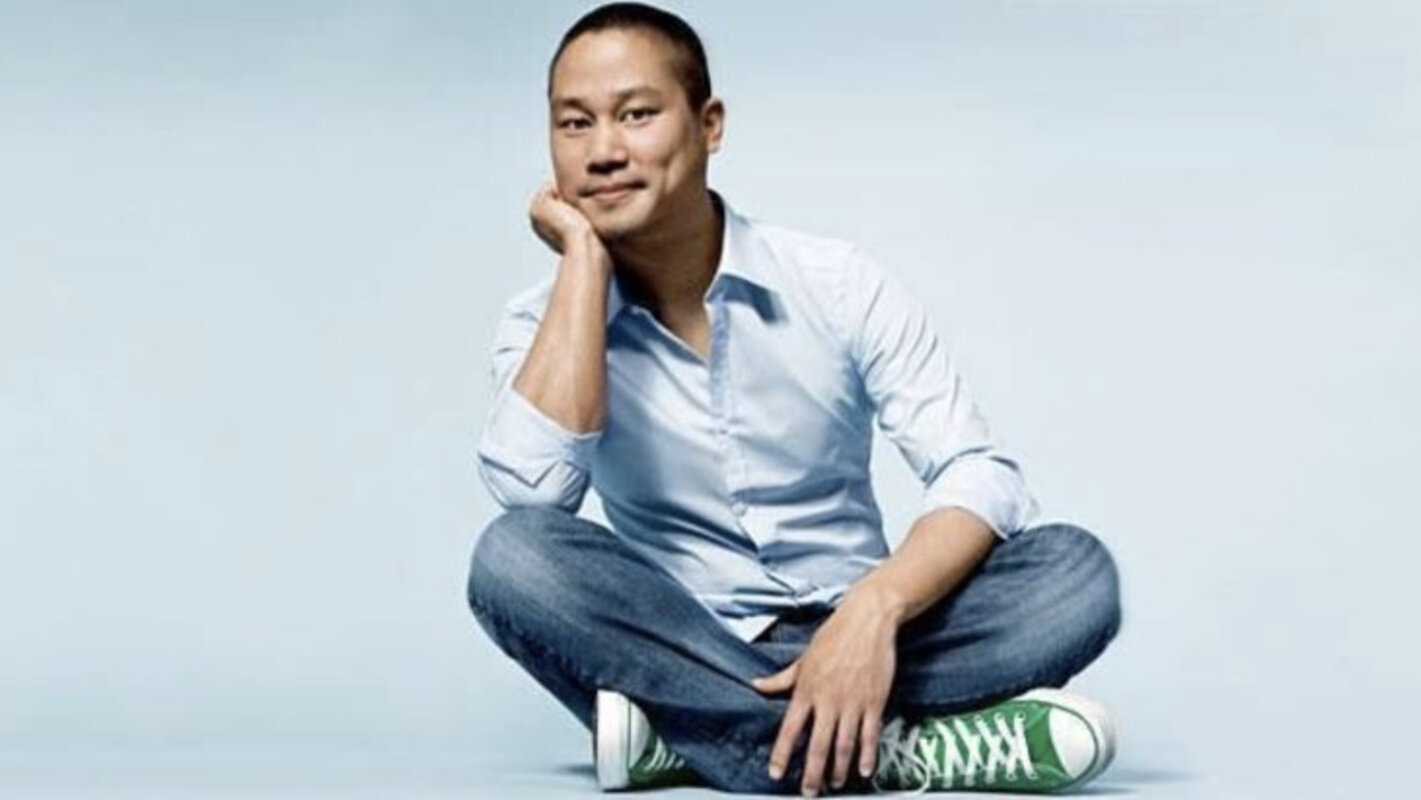
Tony Hsieh, the founder of Zappos, built one of the most iconic brands in e-commerce and amassed an estate estimated at around US$500 million. Yet his death in 2020 exposed a critical flaw: the absence of a clear, verifiable estate plan. Years later, his estate has turned into a legal battleground, with a “mystery will,” untraceable witnesses and a trust no one can locate.
What happens if you don’t plan your inheritance when you have a large estate and complex business structures? The Hsieh case shows it in extreme form: failing to plan is not a neutral risk; it opens the door to dubious documents, opportunistic claims and costly litigation.
This is not just a curiosity from the U.S. business world. It is a direct warning for entrepreneurs, investors and high-net-worth individuals in Costa Rica and the region: failing to plan your succession can turn your legacy into a problem for your heirs.
From Harvard to Zappos: How Tony Hsieh Built an Empire
Tony Hsieh (1973–2020) was an American internet entrepreneur and venture capitalist, best known as the CEO of Zappos, the online shoe and clothing retailer that revolutionized e-commerce with its focus on corporate culture and customer service.
- In 1996, he co-founded LinkExchange, an internet advertising network that he sold to Microsoft in 1998 for US$265 million, when he was only 24–26 years old.
- In 1999, he joined Zappos as an advisor and investor, later becoming CEO. Under his leadership, the company grew from almost zero sales to more than US$1 billion in annual merchandise sales.
- In 2009, Amazon acquired Zappos in a deal valued at approximately US1.2billion.HsiehisestimatedtohavereceivedatleastUS214 million directly from the transaction, and his net worth was estimated between US840millionandoverUS1 billion at the time of his death.
Hsieh became famous not only for the numbers, but for his “Delivering Happiness” philosophy, which he captured in a best-selling book and which turned Zappos into a case study in organizational culture.
Death Without a Visible Will: The First Mistake
Hsieh died in November 2020, at age 46, from smoke inhalation after an accidental fire at a house in Connecticut where he was staying.
- He was not married.
- He had no children.
- There was no visible will or documented estate plan at the time of his death.
Under Nevada law (where he resided and where the probate case was filed), in the absence of a will and without a spouse or descendants, his parents were the natural heirs to his entire estate, estimated at around US$500 million.
For several years, the probate process moved forward on that basis: intestate, with his parents as administrators of the estate.
What happens when a high-net-worth individual dies without a will? In simple terms, the law decides for them: assets are distributed according to general intestate succession rules, without taking into account special projects, business partners, foundations or informal wishes the deceased may have expressed during their lifetime. In complex estates, this often leads to delays, additional costs and greater exposure to disputes.
The “Mystery Will” of 2025: How It Appeared and What It Said
In early 2025, a priority mail envelope arrived at a law firm in Reno, Nevada. Inside was a seven-page document, dated March 13, 2015, presented as the last will and testament of Tony Hsieh.
The will came with a letter explaining that it had been found in February 2025 among the belongings of a 91-year-old Pakistani man named Pir Muhammad, who allegedly died of Alzheimer’s without knowing about Hsieh’s death. The person who sent the envelope identified himself as Pir Muhammad’s grandson, named Kashif Singh.
- No friend, family member or close collaborator of Hsieh had ever heard of Pir Muhammad.
- There was no known connection between Hsieh and Pakistan.
- Since the envelope was sent, neither Pir Muhammad nor Kashif Singh have been located.
Key Content of the Will
If valid, the document would radically change the destination of the estate:
- US$3 million to Harvard, his alma mater.
- US$50 million plus the proceeds from the sale of four properties to an entity called the “Tony Hsieh Lit Wow Irrevocable Trust”, a trust with no public record and whose actual beneficiaries are unknown.+2
- Donations to various charities (Red Cross, Gates Foundation, etc.), which people close to Hsieh say he never significantly supported.
- The remainder of the estate would go to the family, but only after fulfilling all those legacies and with a harsh “no-contest” clause (in terrorem): if a family member challenged the will and lost, they could be excluded from receiving anything.
The will named two Nevada attorneys (Robert Armstrong and Mark Ferrario) as co-executors, who did not personally know Hsieh and were surprised to find themselves appointed.
Can a will appear years after death and change everything? Yes. In many jurisdictions, as long as the deadline for submitting a will has not expired, a document that meets minimum formal requirements can be admitted and open a contest process. This is especially delicate when there is no known prior will and no plan communicated to key people.
Why the Will Is So Suspicious (Yet Still Moved Forward)
Despite multiple red flags, the document met the minimum formal requirements under Nevada law to be admitted for processing:
- It was in writing.
- It had the testator’s signature (supposedly Hsieh’s).
- It had at least two witnesses (in fact, four).
In most U.S. jurisdictions, that is enough for a court to seriously consider the will; doubts about authenticity are resolved within the will contest process itself.
Main Objections from the Family and Experts
Hsieh’s family (particularly his father, Richard Hsieh) and their attorneys have raised multiple objections:
- Non-existent or untraceable witnesses:
- The addresses of the four witnesses do not correspond to real residences.
- They do not appear in property, professional, electoral, court or social media records.
- The owners of the properties listed as witness addresses said they did not know those people.
- Questioned signature: A handwriting expert concluded that Hsieh’s signature on the will is a forgery.
- Language and style: A Cambridge linguistics professor determined that the language patterns in the document are consistent with South Asian English (India/Pakistan), not Hsieh’s writing style or that of an experienced U.S. attorney.
- Data errors: The will misspells Hsieh’s middle name (appearing as “Hsia-H” instead of “Hsieh”).
- Schedule on the supposed signing day: Hsieh’s personal records for March 13, 2015 show meetings and calls, but no reference to signing a will, nor to Pir Muhammad or the listed witnesses.
- Non-existent trust: There is no public record of the “Tony Hsieh Lit Wow Irrevocable Trust” or other trusts mentioned.
Despite all this, the judge in the case said the will was “just strange,” but that strangeness does not automatically invalidate it, and ordered the matter to be resolved in a will contest trial.
Why can such a dubious will go to trial? Because the legal system tends to allow discussion of the validity of a document that, on paper, meets formal requirements. This protects against arbitrary destruction of wills, but also opens the door for questionable documents to generate years of litigation if there is no solid, verifiable prior planning.
The Cost of Chaos: Litigation, Fees and Estate at Stake
The case has become one of the most high-profile and costly succession litigations in recent years.
- Both sides have hired top-tier attorneys; fees are paid from the estate itself.
- The two attorneys named as co-executors in the will were appointed by the court as special administrators, with the right to be paid from the estate.
- Every dollar spent on litigation is a dollar that does not reach the rightful heirs or the causes Hsieh would have wanted to support.
In addition, the estate has had to face:
- Multiple creditor claims.
- A significant tax liability with the IRS.
- The need to sell assets (properties, businesses, stakes) to cover expenses and debts.
As the litigation continues, projects that were central to Hsieh’s legacy (such as the revitalization of downtown Las Vegas) have been paused, sold or abandoned, because there was no legal structure to ensure their continuity.
Is it worth “saving” on a will if my heirs are going to fight anyway? Experience shows the opposite: the absence of a will does not avoid conflicts; it moves them to a more uncertain and costly arena. A well-drafted will does not completely eliminate the risk of litigation, but it drastically reduces the chance of dubious documents appearing, limits room for contradictory interpretations and makes it easier for a judge to clearly identify your wishes.
What This Case Teaches Entrepreneurs and High-Net-Worth Individuals in Costa Rica
The Hsieh case is extreme, but the logic is the same for many estates in Costa Rica and the region:
- People who have built wealth through businesses, investments and real estate.
- Assets that, for tax, privacy or business organization reasons, are held in the name of companies (domestic or offshore).
- A sense of “I’ll deal with it later” or “my family knows what to do” that postpones estate planning.
When Assets Are Held in Company Name: A Special Area of Concern
In Costa Rica, it is common for entrepreneurs and high-net-worth investors to acquire properties, yachts, investment accounts and other assets in the name of companies. This may make sense from a tax, asset protection or business organization perspective, but it introduces an important succession risk:
- What you own is not the assets, but the shares or interests in the company.
- If there is no clear will specifying what happens to those shares, and no aligned corporate structure (shareholders’ agreements, bylaws, designation of successors in management roles), heirs can become blocked: they do not access the assets, only shares they cannot easily control or sell.
Is it true that assets held in a company’s name do not pass through the will? Assets held in the name of a company are not your direct property, but the company’s. What you can dispose of in your will are the shares or interests in that company. If there is no planning that coordinates the will with the corporate structure (shareholders’ agreements, bylaws, designation of successors), your heirs may end up blocked: they have shares, but no effective control over the assets.
In other words: without planning, your heirs do not inherit peace of mind; they inherit litigation, uncertainty and million-dollar costs.
Will and Testamentary Trust: Two Key Tools to Protect Your Estate
For high-net-worth individuals, especially when there are businesses and corporate structures, two instruments are central: the will and the testamentary trust. Both are complementary, but serve different functions.
Will: The Foundation of Any Estate Plan
A will is the document through which you specify, for after your death, what will happen to your assets and rights. In simple terms:
- What it does: It indicates who your heirs will be, what assets or rights each one receives, and who will be the executor responsible for carrying out your wishes.
- What it covers: Your personal assets (accounts, properties in your name, vehicles, interests in companies, etc.).
- What it does not cover on its own: Assets held in the name of a company do not pass directly through the will; what passes are the shares or interests, and that is where it is key that the will is coordinated with the corporate structure.
A well-designed will:
- Reduces the risk of disputes among heirs.
- Facilitates the probate process.
- Decreases the likelihood of dubious documents or opportunistic claims appearing.
Do I need a will if I already have everything in company name? Yes. Even if your assets are held in companies, you own the shares or interests in those companies. The will is the instrument that allows you to specify who will inherit those shares and under what conditions. Without a will, those interests are distributed according to intestate succession rules, which can fragment control of the company and generate conflicts among heirs and partners.
Testamentary Trust: Greater Control, Privacy and Flexibility
A testamentary trust is a mechanism by which you arrange that certain assets or rights be transferred, at the time of your death, to a trust that will be administered by a trustee (which can be an individual or an institution) for the benefit of the beneficiaries (your heirs or designated beneficiaries).
In practical terms:
- What it does: It creates a legal “box” (the trust) that receives part or all of your estate, and establishes clear rules on how it is administered and distributed.
- What it covers: It can include company shares, real estate, investment accounts, rights, insurance policies, etc.
- What advantages it offers over a simple will:
- Greater control over how and when assets are distributed (for example, staggered distributions by age, milestones or conditions).
- Greater privacy, as the trust does not always have the same public exposure as a probate process.
- Ability to design family governance rules (how decisions are made, who administers, how conflicts are resolved).
- A useful tool to protect vulnerable heirs (minors, people with disabilities, etc.).
For estates with businesses, a testamentary trust allows:
- Maintaining the unity of the business by avoiding excessive fragmentation of shares.
- Establishing clear succession rules for management and ownership.
- Reducing the risk that family disputes paralyze the company.
When is it better to use a testamentary trust instead of a simple will? A testamentary trust is especially useful when you want to maintain some control over how and when your estate is distributed (for example, for young children, to prevent part of the estate from being sold immediately, or to maintain the unity of a family business). In practice, many high-value estates combine a base will with one or more testamentary trusts to achieve greater flexibility and protection.
Will, Testamentary Trust, or Both?
In practice, for most high-value estates with business structures, the optimal solution is usually a combination:
- A will that clearly and verifiably specifies the destination of your assets and shares.
- One or more testamentary trusts that receive part or all of the estate and establish rules for administration and distribution over time.
- An aligned corporate structure (shareholders’ agreements, bylaws, designation of successors) that ensures the company can continue operating without disruptions.
Where is it best to keep my will so it is not lost? The safest option is for the original to be kept under the custody of your attorney or in an institution that offers that service (for example, some law firms or specialized entities), and for at least one trusted person (executor, close family member) to know where it is and how to access it. It is also useful to leave written instructions about the existence of the will and key contacts, without necessarily revealing the entire content.
Key Lessons for You: How to Protect Your Estate Against Fraud and Litigation
The Tony Hsieh case sends very clear messages to entrepreneurs and high-net-worth individuals:
- Failing to plan is not neutral: The absence of a clear estate plan creates a space that others can fill with dubious documents, claims and litigation.
- A will must be verifiable, not just “valid on paper”: Signature before known attorneys, identifiable witnesses, secure storage and clear communication to key people.
- Informal promises become costly problems: Verbal commitments, notes or informal “agreements” turn into a source of conflict for heirs.
- A vision without a legal structure does not survive: Projects, companies and foundations need a legal structure designed to perpetuate that vision.
- Choosing decision-makers wisely: Executors, trustees and successors must know your vision and be prepared to carry it forward.
- Assets in companies = special area of concern: If your assets are held in companies, you need planning that coordinates will, trust and corporate structure.
How soon should I make my will? There is no “perfect” time, but there are clear signals: if you have assets in your name, company shares, minor children or dependents, or if you have made promises or informal agreements about your estate, it is already time to plan. The sooner you do it, the more options you have to design an appropriate structure and correct details before an emergency forces you to act.
Planning Is Protecting: The Next Step to Secure Your Legacy
Tony Hsieh built systems that worked: a company, a culture, a vision for a city. The one system he did not build was the most important one: his estate plan. The result: US$500 million in dispute, years of litigation and a fragmented legacy.
If you have placed your assets in companies, trusts or offshore structures, your risk is similar: without coordinated testamentary and corporate planning, your heirs do not inherit peace of mind; they inherit litigation, uncertainty and million-dollar costs.
At ERP Lawyers, we help high-net-worth individuals design wills, testamentary trusts and corporate structures that protect their legacy, shield their families and ensure their vision survives. The difference between a case like Hsieh’s and a peaceful estate is, very often, just one meeting.
Schedule a Free Legal Consultation on Estate Planning
If you want to evaluate how your succession is structured and what risks your estate faces, we invite you to schedule a free legal consultation on estate planning with our specialized team.
- We will analyze your estate and family situation.
- We will review the coordination between your assets, companies and succession documents.
- We will propose a clear strategy to protect your legacy against fraud, litigation and disputes.
Do not leave your estate exposed. Planning today is protecting your family and securing your vision for the future.