
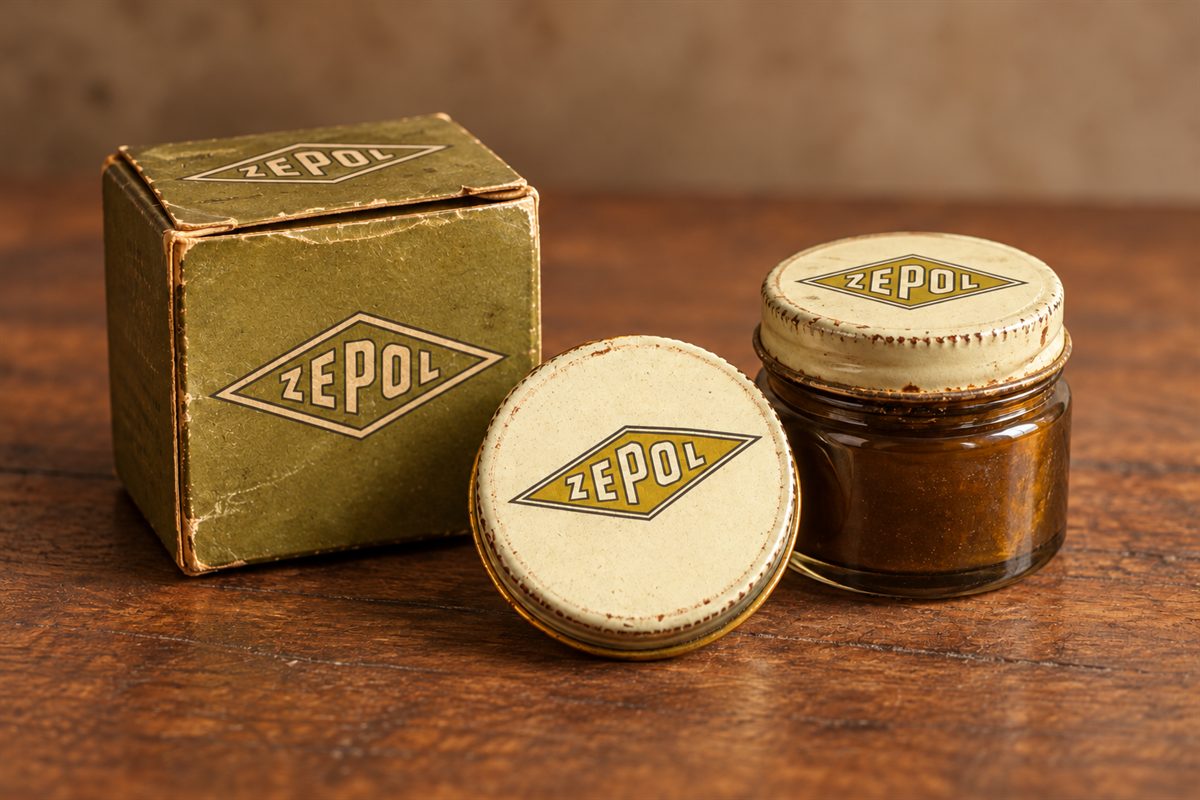
The Costa Rican company that began with an ointment has expanded its product range and turned its development and manufacturing expertise into a service for other brands. Zepol’s story offers a useful look at how a business can change—and what it takes to carry that change forward across generations.
What does a company do when the product that made its name can no longer define its future? Zepol has built new offerings without leaving behind the brand that made it familiar to generations of Costa Rican consumers.
The story began with an ointment formulated by pharmacist Luis Alejandro López. After selling it through Farmacia López, founded in 1939, he established Laboratorios Zepol in 1950 to manufacture it at industrial scale. Leadership later passed to his son, Alejandro López van der Laat, and in 2011 to his granddaughter, María Alejandra López Yglesias. Zepol’s official history traces that development.
Today, the third generation leads a business that extends well beyond its original product. Zepol develops new formulas, sells several product lines, and provides development and manufacturing services to third parties. Its evolution shows how a company can draw on what it already knows how to do to create another stage of growth.
A strong brand can open the door, but the business still has to evolve
For many Costa Rican consumers, Zepol is inseparable from its original ointment. That recognition is valuable: it gives the company a name people already know and a reason for them to pay attention to what comes next. But a well-established brand cannot determine on its own which products customers will need in the future.
Zepol began expanding its offering long before its current transformation. Its corporate history records milestones such as the introduction of Manzatín in the late 1980s, a children’s version of Zepol in the 1990s, and a cream version in 2008. The company’s current diversification continues a longer pattern, now with a broader scope and a new identity.
In a September 2026 interview with La Nación, María Alejandra López discussed the transition toward ZepoLab and the work of Zepol Innovation Lab. She said the company had more than 60 products at different stages of development. That figure describes a pipeline of projects, not 60 products already available on the market.
The distinction helps explain what innovation requires. It is not simply a matter of adding products to a catalog. It also means identifying needs, developing formulas, assessing whether they are commercially viable, and deciding which ones merit the investment to reach the market. For a company built around an iconic product, the ability to explore new categories may matter as much as its next launch.
Zepol’s experience raises a question other businesses can use: which parts of their identity should they preserve, and what needs to change for that identity to remain valuable?
Turning an internal capability into another line of business
There is a second, less visible transformation that offers another way to understand the business. Laboratorios Zepol provides contract development and manufacturing services to other companies. Its contract manufacturing division says it can handle a project from start to finish or support a specific stage, working with formats such as creams, gels, and ointments.
In practical terms, a company seeking to launch a product can draw on Zepol’s expertise and facilities to develop or manufacture it. The laboratory uses its capabilities not only for its own brands but also as a service for third parties.
That step changes how a company can think about its assets. A plant, technical team, quality-control process, or supplier network may be more than resources that support its main product. If there is demand and the operation can support it, they may also form the basis of a service. The opportunity will depend on costs, available capacity, regulatory requirements, and the company’s strategy; it does not follow automatically from having infrastructure in place.
The case suggests a practical question: what can a business do consistently that it currently uses only for itself? The answer may reveal a path to growth other than opening another location or selling more units of the same product.
The third generation inherits a different business
Family continuity at Zepol has not meant keeping the business unchanged. When María Alejandra López took over as director in 2011, she inherited a company with decades of history, a recognized brand, and industrial capabilities built by earlier generations. The current challenge is to decide how to use that foundation to compete in changing markets and categories.
López told La Nación that the family retained full ownership and was not considering outside investors at the time of the interview.
The business lesson extends beyond this case. Each generation may inherit an organization that is different from the one the previous generation knew. Products, capabilities, risks, and the people needed to lead the company all change. Preparing for continuity therefore means thinking about the business’s next strategy as well as the rules that will make it possible to carry that strategy out.
Bringing generations together takes clear rules
One generation may have built the company while another is ready to lead its expansion. If both are involved in decisions, it helps to define what belongs to each role. Being a family member, owning shares, working in the company, and managing it are different relationships. A person may hold more than one role, but the responsibilities should not be confused.
Imagine that one generation wants to invest in product development while another would rather focus on the traditional product line. Enthusiasm for innovation and a desire to preserve a legacy do not, by themselves, settle who can authorize the investment, how owners are heard, or what information they need to make a decision.
Legal tools can turn general agreements into workable rules. The company’s bylaws set out its formal organization. Shareholder agreements can govern commitments among owners. A family protocol can record expectations about family participation, preparing future leaders, and how disagreements will be discussed. Estate and succession planning can address what happens to an owner’s interest after death. None of these tools replaces all the others; their purpose and effect depend on how they are designed and coordinated in each situation.
It is also useful to look at the assets that support the business’s next stage. If growth depends on brands, formulas, technical knowledge, collaborations, or manufacturing for third parties, the company should review who owns each asset, what commitments it makes to customers, and how it protects information shared in the course of business. Legal planning should follow commercial decisions, rather than start with a checklist of documents disconnected from the operation.
For more on ownership, management, and succession in Costa Rica, see our Spanish-language guide to structuring a family business.
Preparing the next stage
Zepol shows how continuity can rest on two moves at once: preserving the recognition built around a brand while finding new uses for capabilities accumulated over decades. The third generation has inherited a legacy and now leads the decisions that will shape what the business can do next.
For another company, a useful starting point is a concrete question: what will be its next source of value, and what ownership, leadership, and succession rules will help it develop that opportunity? Answering it calls for commercial judgment and a legal structure suited to the company’s actual circumstances.
ERP Lawyers works with businesses and entrepreneurial families to coordinate corporate and succession matters with their continuity plans. If your business is entering a new stage, let’s discuss which decisions are worth preparing now.