
Business Leaders Strengthen Hiring Practices
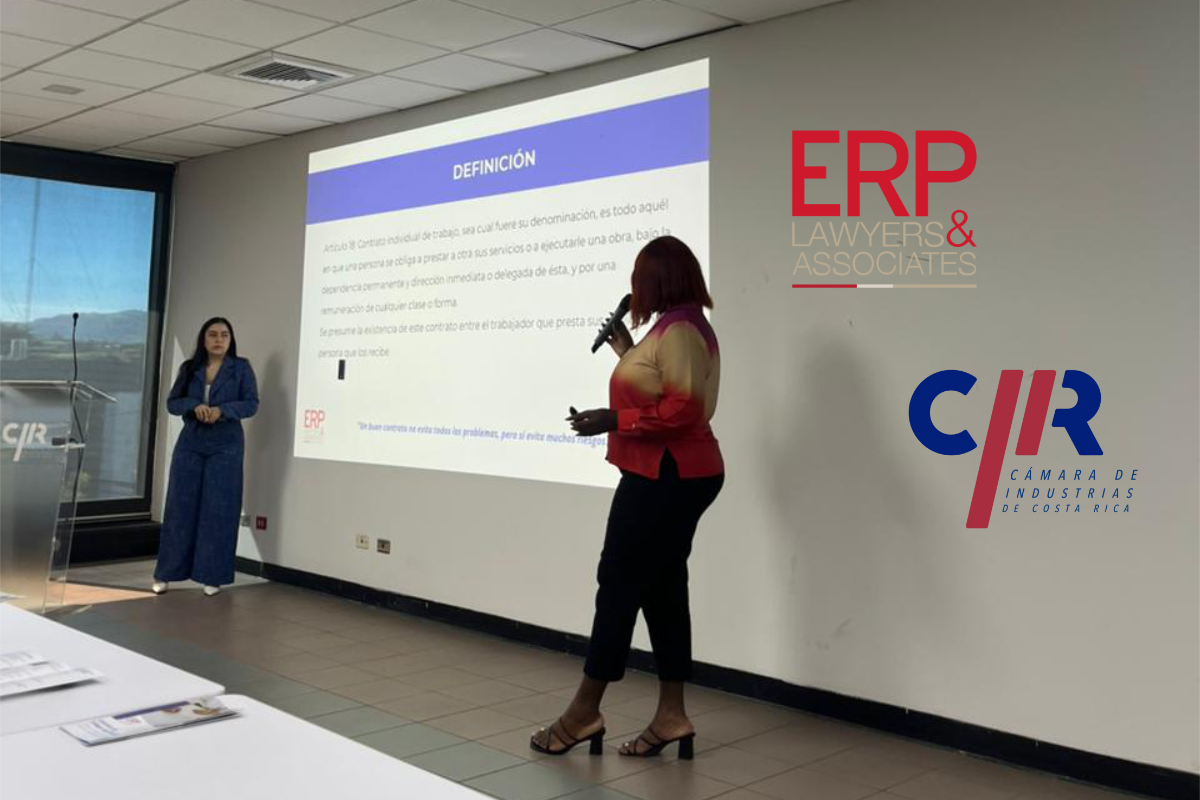
On June 11, ERP Lawyers participated in a seminar hosted by the Costa Rican Chamber of Industries, where attorneys Maisha Mattis and Valeria Mora presented “Risk-Free Employment Contracts: Key Clauses and Best Hiring Practices.”
The session focused on the legal and practical considerations companies should take into account when hiring employees, as well as the most common risks arising from improperly structured employment agreements.
The discussion highlighted the importance of using clear, customized employment contracts that reflect the specific needs of each organization and serve as a preventive tool to minimize labor disputes and legal exposure.
What Should an Employment Contract Include?
One of the key topics addressed during the seminar was the legal definition of an employment relationship under Costa Rican labor law.
An employment relationship generally exists when the following elements are present:
- Personal provision of services.
- Compensation.
- Subordination or employer control.
While employment agreements may legally be established verbally, the speakers emphasized that written contracts provide greater legal certainty and clarity for both employers and employees.
A properly drafted employment contract should generally include:
- Identification of the parties.
- Position and job responsibilities.
- Work schedule.
- Salary and compensation.
- Work location.
- Start date.
- Benefits and allowances.
- Any special conditions permitted by law.
What Are the Most Common Hiring Mistakes?
During the presentation, five recurring hiring mistakes were identified as significant sources of labor risk:
1. Using Generic Templates Found Online
Standardized contracts often fail to address the specific realities and operational needs of a business.
2. Classifying Workers as Independent Contractors When Subordination Exists
If a worker is subject to the company’s direction, supervision, and control, an employment relationship may exist regardless of the title assigned to the agreement.
3. Failing to Clearly Define Job Duties
Unclear job descriptions frequently lead to misunderstandings and workplace disputes.
4. Not Documenting Important Changes
Significant modifications to employment conditions should be properly documented to avoid future disagreements.
5. Misusing Fixed-Term Contracts for Permanent Needs
This remains one of the most common labor law compliance issues and may result in a fixed-term relationship being reclassified as indefinite.
When Is a Fixed-Term Contract Appropriate?
The speakers explained that indefinite-term employment contracts are the general rule under Costa Rican labor law.
Therefore, fixed-term contracts should only be used when there is a legitimate temporary need, such as:
- Replacing employees on medical or maternity leave.
- Temporary projects.
- Seasonal work.
- Short-term increases in production demands.
If the employee continues performing the same functions to satisfy an ongoing business need, the employment relationship may be deemed indefinite, triggering additional legal obligations for the employer.
What Is the Employer’s Right to Modify Working Conditions?
Another important topic discussed was the concept of Ius Variandi, the employer’s authority to make reasonable changes to certain working conditions when justified by legitimate business needs.
This authority may be exercised when:
- There is a legitimate business reason.
- The employer acts in good faith.
- Employees’ rights are respected.
- The changes are reasonable and proportionate.
Examples of Lawful Modifications
- Reassigning similar duties.
- Adjusting internal procedures.
- Reasonable schedule modifications.
- Transfers to previously authorized work locations.
When Does It Become an Abuse of Authority?
An employer’s actions may be considered abusive when they:
- Reduce an employee’s salary.
- Lower the employee’s professional status.
- Radically alter job functions.
- Cause significant hardship without justification.
- Impose unreasonable changes to work schedules or location.
In such situations, employees may have the right to challenge the modification and pursue available legal remedies.
Why Should Companies Review Their Employment Contracts Regularly?
Businesses evolve over time. Organizational structures, operational needs, and workforce requirements change.
Regularly reviewing employment contracts helps companies:
- Reduce labor-related risks.
- Improve workforce management.
- Strengthen legal compliance.
- Provide clarity for both parties.
- Foster healthier employment relationships.
Prevention Remains the Best Strategy
One of the key conclusions of the seminar was that while a well-drafted employment contract cannot eliminate every labor dispute, it significantly reduces risks and provides greater legal certainty for employers and employees alike.
Preventive legal planning, proper documentation, and timely legal guidance continue to be essential tools for effective workforce management.
Do You Need to Review or Update Your Employment Contracts?
At ERP Lawyers, we assist businesses with preventive labor law strategies, helping employers create clear, compliant, and effective employment agreements tailored to their operational needs.
📩 Contact us today to receive personalized guidance on drafting, reviewing, or updating employment contracts in Costa Rica.